A visitor has explored your website.
They've learned about your business.
They've looked at your services.
They've read your FAQ.
They may even have compared your packages and pricing.
Now they're interested.
There's just one thing left to do: contact you.
This is where your contact page becomes extremely important.
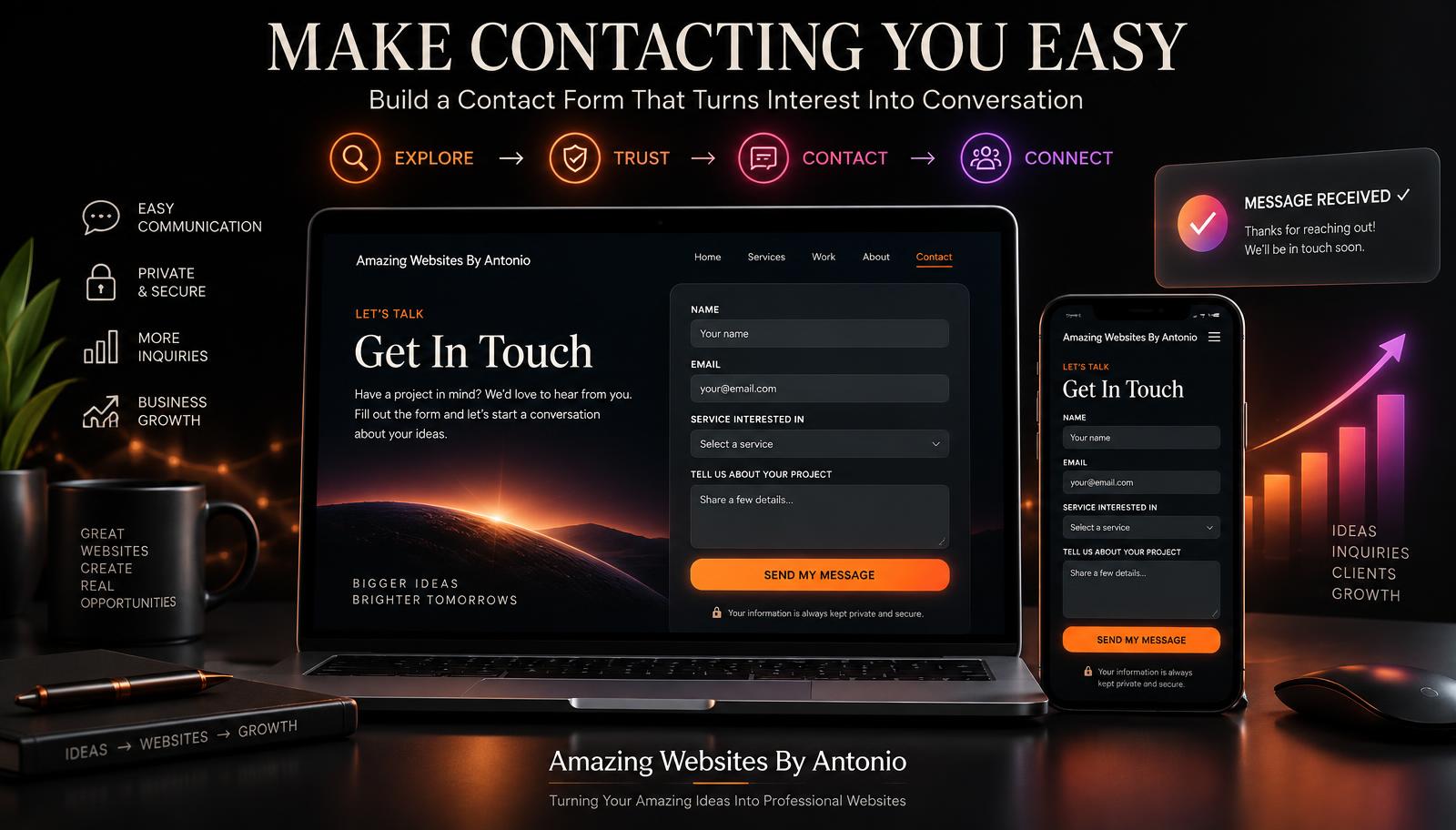
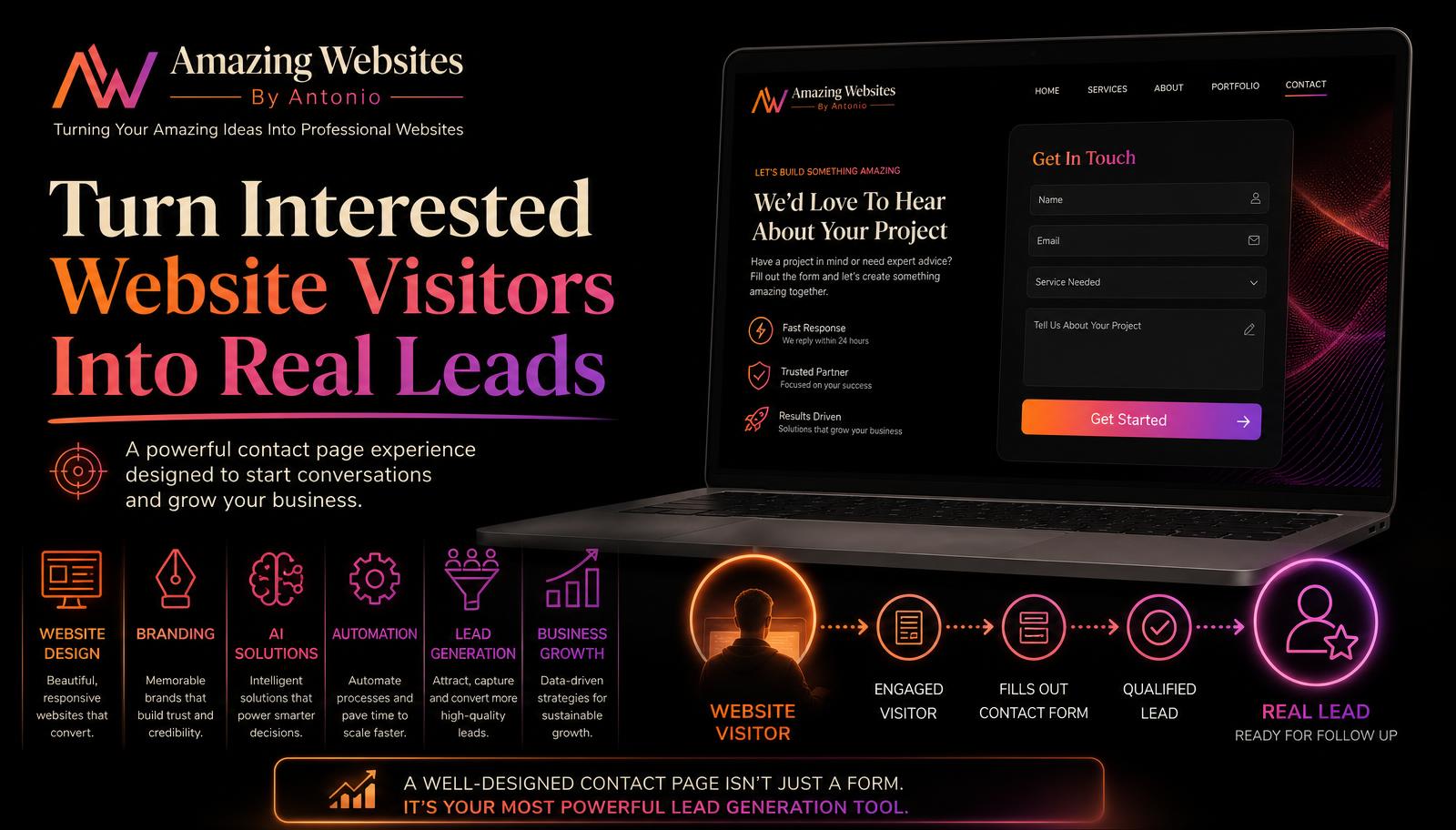
A contact page shouldn't simply display an email address and a form. It should make reaching your business feel easy, professional, welcoming, and trustworthy.
Here are some ways to create a contact page that turns interested website visitors into real leads.
1. Make Your Contact Page Easy to Find
Don't hide your Contact page. A visitor who's ready to reach out shouldn't have to search for it.
Consider including a clear Contact or Get Started button in your main navigation.
You can also place contact calls to action throughout your website. For example:
Ready to start your project?
The easier it is to reach you, the fewer unnecessary barriers you put between an interested visitor and your business.
2. Use a Strong Contact Page Headline
"Contact Us" works, but your page can say more.
Try a headline that reinforces what happens next:
- Let's Talk About Your Project
- Ready to Turn Your Idea Into Something Amazing?
- Tell Us What You're Looking to Build
- Let's Create Something for Your Business
Your headline should make reaching out feel like the beginning of a helpful conversation.
3. Explain What the Form Is For
Before asking visitors for information, tell them why you need it.
For example: "Tell Amazing Websites By Antonio a little about your business, what you're looking to create, and what you'd like help with. This information will help us better understand your project before we follow up."
Now the form has a purpose. The customer understands why they're completing it.
4. Don't Ask for Too Much Information
A contact form shouldn't feel like a job application. Only ask for information you actually need.
A simple form could include:
- Name
- Business or organization name
- Service you're interested in
- Project description
- Preferred contact method
You can always gather additional information later. The goal is to make the first step easy.
5. Let Customers Select the Service They Need
If your business offers several services, add a dropdown or selection field.
For Amazing Websites By Antonio, options might include:
- Website Design
- Website Redesign
- Branding
- AI Solutions
- Automation
- Digital Tools
- Jingles or Audio Branding
- Business Growth Solutions
- Merchandise or Brand Products
- Not Sure Yet
- Something Else
The "Not Sure Yet" option is important. Customers shouldn't have to understand your entire service catalog before they're allowed to contact you.
6. Ask About Their Goal
One of the most valuable questions you can put on a contact form is: What are you trying to accomplish?
A customer might say:
- "I need my first business website."
- "My current website looks outdated."
- "I need a logo and website that match."
- "I want to automate part of my business."
- "I don't know where to start with AI."
That information is often more useful than asking customers which technical solution they think they need.
7. Set Expectations About What Happens Next
Customers shouldn't submit a form and wonder whether it disappeared into the internet.
Tell them what happens afterward:
- Submit your project information.
- Amazing Websites By Antonio reviews your request.
- We'll follow up to discuss your needs and next steps.
That small explanation can make the process feel much more professional.
8. Create a Great Confirmation Message
After someone submits your form, don't simply show "Form submitted." Give them reassurance.
For example: "Thank you for reaching out! Your message has been received. Amazing Websites By Antonio will review the information you provided and follow up about the next steps for your project. Turning Your Amazing Ideas Into Professional Websites."
This tells the customer their submission worked.
9. Make Sure the Form Actually Works
A beautiful contact form is useless if submissions don't reach you. Test your form regularly.
Check:
- Does the Submit button work?
- Does the message reach the correct inbox?
- Are all required fields working?
- Does the customer receive the correct confirmation?
- Does it work on a phone, tablet, and desktop?
Testing should be part of maintaining your website.
10. Make the Page Mobile-Friendly
Many potential customers will contact you from their phones. Form fields should be large enough to tap comfortably. Text should be easy to read. Dropdown menus should work properly. Buttons shouldn't be too small.
A mobile visitor should have the same easy experience as a desktop visitor.
11. Build Trust Around the Form
Customers may be sharing their name, email address, phone number, business information, or project ideas. Give them reasons to feel comfortable.
You could include:
- A short privacy statement
- Your business name and branding
- Testimonials
- Links to your portfolio
- Professional contact information
- A clear explanation of how submitted information will be used
Trust matters at the exact moment you're asking someone to share their information.
12. Give Customers Another Way to Contact You
Not everyone likes forms. Depending on your business, you may also offer:
- Business email
- Phone
- Social media
- Scheduled consultation
- Live chat
You don't have to offer every communication method. Choose the ones you can reliably manage.
13. Don't Overload the Page
Your contact page has one primary purpose: help someone contact you. Avoid distracting visitors with too many unrelated sections, animations, promotions, or links.
Keep the path clear: Understand → Complete Form → Submit → Know What Happens Next.
Simplicity can be powerful.
14. Use AI to Qualify and Guide Leads
AI can make a contact experience even smarter. Imagine a website assistant asking, "What would you like help creating?"
The visitor says, "I just started a business and need everything." The AI assistant could ask a few additional questions about their website, branding, business goals, and timeline before guiding them toward the appropriate service or contact form.
AI shouldn't make reaching a human harder. It should help customers reach the right solution more efficiently.
15. Connect Your Contact Form to Your Business Workflow
A lead shouldn't disappear after someone presses Submit. Depending on your setup, a form submission could:
- Send you an email notification
- Add the lead to a customer-management system
- Trigger a confirmation email
- Create a follow-up task
- Organize leads by service
- Start an automated workflow
This is where your website can move beyond simply collecting information. It can become part of how your business operates.
16. Measure Whether Your Contact Page Is Working
Don't only measure website traffic. Ask:
- How many people visit the contact page?
- How many start the form?
- How many complete it?
- Which services generate the most inquiries?
- Where are visitors coming from?
If many people reach your contact page but very few submit the form, something may be creating friction.
17. Give People a Reason to Take Action Now
A strong call to action can help an interested visitor make the decision to reach out.
Examples:
- Let's Build Your Website
- Start Your Project
- Tell Us About Your Idea
- Request a Quote
- Let's Talk About Your Business
- Get Started
Your call to action should feel like a natural next step—not pressure.
Your Contact Page Is a Bridge
Think of your website as a journey.
Your homepage creates the introduction. Your services explain what you offer. Your portfolio shows what you can do. Your blog demonstrates knowledge. Your FAQ answers questions. Your pricing provides clarity.
And your contact page creates the bridge between "I am interested" and "I am ready to talk."
That bridge should be simple to cross.
Pro Tip
Submit your own contact form from your phone today. Pretend you're a potential customer. Ask yourself:
- Was the form easy to find?
- Did I understand what information was required?
- Was it easy to complete?
- Did the Submit button work?
- Did I receive a clear confirmation?
- Did the business receive the message?
- Did I know what would happen next?
If you find friction anywhere in that process, your customers may be experiencing it too.
Conclusion
A strong contact page doesn't just collect messages. It creates opportunities for conversations. And those conversations can become customers.
Amazing Websites By Antonio
Turning Your Amazing Ideas Into Professional Websites