Imagine someone has discovered your business. They visit your homepage. They read your story. They look at your portfolio. They like what they see.
Now they have another question: "What exactly can this business do for me?"
Your Services page needs to answer that question.
A great Services page does more than list what your business offers. It helps visitors understand what you do, why it matters, who it is for, and what they should do next.
Here are some ways to create a Services page that can turn interest into action.
1. Start With a Clear Headline
Your Services page should immediately tell visitors what you provide. Avoid making people guess.
A strong headline could communicate both the service and its purpose. For example:
"Professional Digital Solutions Designed to Help Your Business Grow."
Then use a short introduction to explain how your services help customers. Clarity should always come before cleverness.
2. Focus on the Customer
Your Services page should not only talk about your business. Talk about the customer.
Instead of saying: "We build websites."
You might explain: "Build a professional online presence that gives customers a clear place to learn about your business, explore your services, and contact you."
The service is still important, but now the visitor understands why it matters.
3. Give Each Service Its Own Section
If you offer several services, make them easy to scan. Each service can have:
- Service name
- Short description
- Customer benefit
- Key features
- Related project
- Call-to-action button
Visitors should be able to quickly identify the service that fits their needs.
4. Explain the Benefit — Not Just the Feature
Features explain what something includes. Benefits explain why customers should care.
Feature: Mobile-responsive website design.
Benefit: Your website can provide a professional experience whether customers visit from a desktop computer, tablet, or smartphone.
Whenever you describe a feature, ask: "What does this mean for the customer?" That answer is often the benefit.
5. Use Simple Language
Customers should not need a technical dictionary to understand your Services page. Avoid unnecessary jargon. If technical language is necessary, explain it.
For example, instead of only saying "Responsive Design," you can explain: "A responsive website automatically adjusts to different screen sizes so it works properly across computers, tablets, and smartphones."
Make your expertise easy to understand.
6. Show Examples of Your Work
If possible, connect each service to a real portfolio project or case study. For example:
- Website Design — View Website Projects →
- Branding — Explore Branding Projects →
- AI Solutions — See AI Projects →
This allows customers to move from reading about your capabilities to seeing evidence of them.
7. Explain Who Each Service Is For
Help visitors recognize themselves. You might say: "This service may be right for you if…" Then provide examples. For website design:
- You're launching a new business.
- Your current website feels outdated.
- Your business needs a professional online presence.
- Your website is difficult to use on mobile devices.
- Customers cannot easily understand your services.
When visitors recognize their own problem, the service becomes more relevant.
8. Explain Your Process
Uncertainty can stop people from taking action. A simple process can make the experience feel easier. For example:
- Step 1 — Discovery: We learn about your business and goals.
- Step 2 — Planning: We determine what your project needs.
- Step 3 — Creation: Your website or digital solution is built.
- Step 4 — Review: You review the project and provide feedback.
- Step 5 — Launch: The finished project is prepared for your audience.
A clear process helps customers understand what happens after they contact you.
9. Address Common Questions
Potential customers may have questions before they're ready to contact you. Your Services page can answer some of them directly. Questions might include:
- What is included?
- How long does the process take?
- Can services be customized?
- How do revisions work?
- What happens after I contact you?
- Do you provide ongoing support?
You can answer the most important questions on the Services page and link to your complete FAQ for more.
10. Use Testimonials Strategically
If you have a genuine customer testimonial connected to a particular service, consider placing it near that service. For example, a website-design testimonial near Website Design, or a branding testimonial near Branding.
This provides social proof at the moment a visitor is evaluating that specific service.
11. Make Pricing Easy to Understand
If you display prices, make them clear. Explain what is included. If every project requires a custom quote, say that clearly. Visitors should understand how to take the next step without feeling confused.
Your pricing strategy should fit your business model.
12. Don't Overload the Page
A Services page does not need to explain every tiny detail about every service. Give visitors enough information to understand the value. Then provide links to dedicated service pages when more detail is needed.
A good structure might be:
- Service name
- Short explanation
- Key benefits
- Example project
- Learn More →
- Start Your Project →
This keeps the main Services page organized.
13. Use Strong Calls to Action
After explaining a service, tell visitors what they can do next. Examples include:
- Start Your Project
- Request a Quote
- Schedule a Consultation
- Learn More
- View Our Work
- Contact Us
Calls to action should be clear and easy to find.
14. Connect Your Services Page to the Rest of Your Website
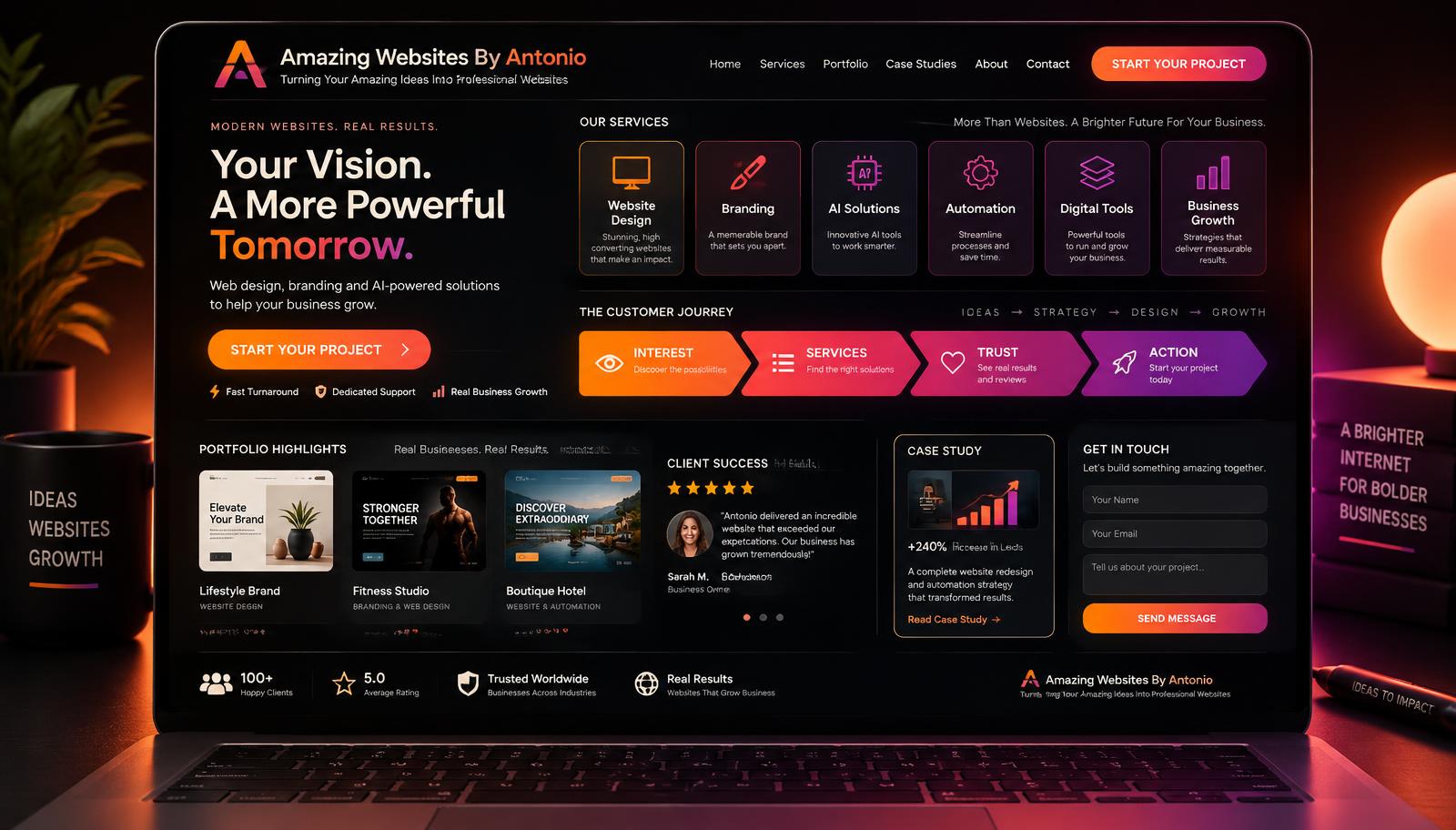
Your Services page should not exist by itself. Connect it with your homepage, portfolio, case studies, testimonials, About page, FAQ, contact page, and blog.
These connections create a customer journey. Someone may go from: Homepage → Services → Portfolio → Case Study → Testimonial → Contact.
Every page can help move the visitor forward.
15. Design for Mobile Visitors
Your Services page should work beautifully on smaller screens. Check that:
- Service cards stack properly
- Text is readable
- Buttons are easy to tap
- Images resize correctly
- Navigation remains simple
- Forms work properly
A great desktop experience should not become a frustrating mobile experience.
16. Keep Your Services Current
Businesses change. Your Services page should change with them. Review it regularly. Ask:
- Are these still the services we provide?
- Are the descriptions accurate?
- Are the links working?
- Are there new portfolio examples?
- Are the calls to action still correct?
- Are the prices current?
An outdated Services page can create confusion.
17. Don't Try to Sell Everything to Everyone
Not every visitor needs every service. That is okay. Your goal is to help the right visitor find the right solution.
Clear service descriptions allow people to determine whether your business fits their needs. That can create better leads and better customer conversations.
18. Give Visitors a Simple Next Step
At the bottom of your Services page, bring everything together. You might say:
Have an amazing idea?
Whether you need a professional website, stronger branding, AI-powered solutions, automation, or digital tools, the next step starts with a conversation.
Then provide one strong button: Start Your Project.
The visitor should never reach the bottom of the page and wonder: "What do I do now?"
Final Thoughts
Your Services page is where curiosity can become possibility. A visitor arrives wanting to know what you do. Your job is to help them understand: what you offer, who it helps, why it matters, how it works, what you've created, and what they can do next.
Don't simply create a list of services. Create a path. Guide visitors from "I wonder if this business can help me…" to "This is exactly what I've been looking for."
Then make the next step easy.
Amazing Websites By Antonio
Turning Your Amazing Ideas Into Professional Websites