You launched your website.
It looks professional.
Your services are listed.
Your contact information is available.
You’ve added blogs, resources, calls to action, and maybe even AI-powered tools.
But there’s an important question every business owner eventually needs to ask:
Is my website actually working?
A website can look impressive and still struggle to create meaningful business results.
On the other hand, a website doesn’t need millions of visitors to be successful.
It needs to help the right people discover your business, understand what you provide, trust what they see, and take meaningful action.
So instead of measuring website success only by appearance or traffic, let’s look at the numbers and behaviors that actually matter.
First, Define What “Working” Means
Before looking at analytics, decide what you want your website to accomplish.
Different businesses have different goals.
Your website might be designed to:
- Generate new leads
- Sell products
- Book consultations
- Collect inquiries
- Grow an email list
- Educate visitors
- Build credibility
- Showcase your portfolio
- Encourage event bookings
- Help customers find information
A website cannot be measured effectively if you haven’t defined what success looks like.
For example:
- If your goal is generating consultations, the number of consultation bookings matters more than simply counting page views.
- If your goal is selling artwork, completed purchases matter.
- If your goal is building authority, blog traffic, search visibility, and returning visitors may be especially important.
Start with the goal.
Then measure what supports it.
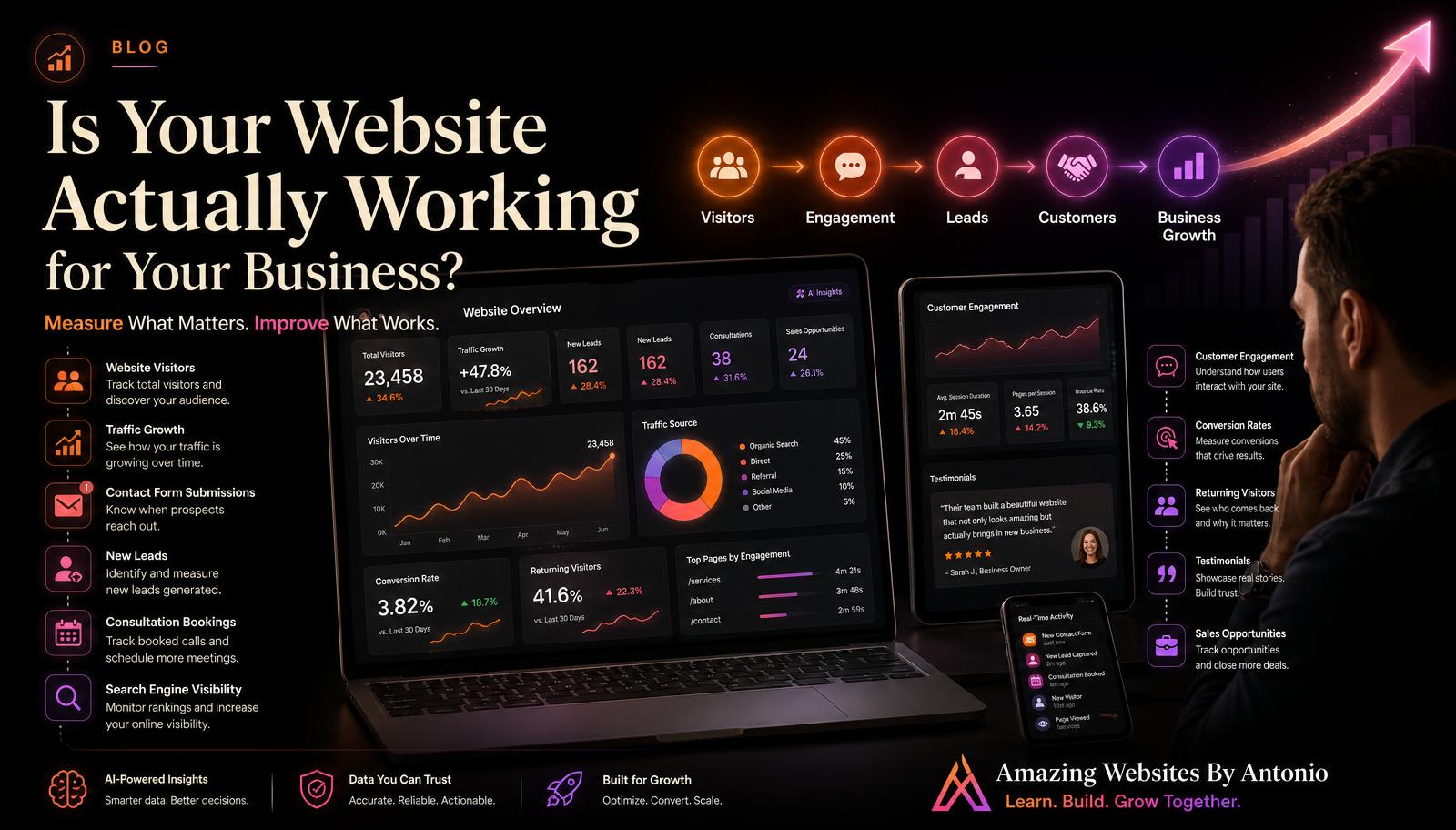
1. Website Traffic
Traffic tells you how many people are visiting your website.
That’s useful—but it’s only the beginning.
Track things such as:
- Total visitors
- New visitors
- Returning visitors
- Most visited pages
- Traffic sources
- Traffic growth over time
For example, visitors might arrive through:
- Social media
- Direct links
- Referrals from other websites
Understanding where people come from can help you determine which marketing activities are working.
2. Don't Judge Success by Traffic Alone
Imagine two websites.
Website A
- Receives 10,000 visitors.
- Only five people contact the business.
Website B
- Receives 1,000 visitors.
- Fifty people contact the business.
Which website is performing better?
Probably Website B.
Traffic matters.
But qualified traffic matters more.
You want people who are genuinely interested in what your business provides.
3. Track Contact Form Submissions
If your website is designed to generate business inquiries, contact form submissions are one of the clearest measurements of success.
Track:
- How many inquiries you receive
- Which page visitors were on before contacting you
- Which services they're asking about
- How many inquiries become conversations
- How many conversations become customers
This begins connecting your website directly to business results.
4. Measure Conversion Rate
A conversion happens when a visitor completes an important action.
Examples include:
- Submitting a contact form
- Booking a consultation
- Making a purchase
- Joining an email list
- Downloading a resource
- Requesting a quote
Your conversion rate measures how many visitors take that action.
For example:
If 1,000 people visit your website and 50 submit an inquiry, your inquiry conversion rate is:
50 ÷ 1,000 × 100 = 5%
The number itself matters less than understanding whether it improves over time.
5. Track Your Calls to Action
Your website probably contains buttons such as:
- Start Your Project
- Contact Me
- Book a Consultation
- View My Portfolio
- Download the Guide
- Share Your Experience
Track which buttons people actually click.
If an important button receives very few clicks, investigate.
Maybe:
- The wording isn't clear
- The placement isn't noticeable
- Visitors aren't ready for that action yet
- The page isn't building enough trust
Calls to action give you valuable clues about visitor behavior.
6. Look at Your Most Popular Pages
Which pages receive the most attention?
You may discover that visitors frequently visit:
- Your homepage
- Services
- Portfolio
- Blog
- About page
- Educational resources
- Testimonials
Popular pages reveal what visitors care about.
If one particular service page receives significantly more traffic than the others, that could indicate stronger customer interest.
You may decide to create more content around that topic.
7. Identify Pages People Ignore
Analytics can also reveal pages that receive very little attention.
That doesn’t automatically mean you should delete them.
Ask:
- Is this page difficult to find?
- Does the navigation make sense?
- Is the title unclear?
- Do other pages link to it?
- Is the information still useful?
Sometimes a valuable page simply needs a better path for visitors to discover it.
8. Understand How Long Visitors Stay
Time spent on a page can provide useful context.
Suppose someone visits a detailed educational blog and stays several minutes.
That may suggest they're reading the content.
If visitors consistently leave important pages almost immediately, investigate.
Possible causes include:
- Slow loading
- Confusing design
- Unclear messaging
- Poor mobile experience
- Content that doesn't match expectations
But don't rely on one number alone.
Interpret behavior in context.
9. Pay Attention to Where Visitors Leave
Every visitor eventually leaves your website.
That's normal.
But you should look for patterns.
If large numbers of people leave at the same point in an important journey, there may be friction.
For example:
Homepage → Services → Contact Form
If many visitors reach the contact form but don't submit it, ask:
- Is the form too long?
- Are you asking for unnecessary information?
- Does the page build enough trust?
- Is there a technical problem?
Analytics helps you find areas worth testing.
10. Measure Returning Visitors
Returning visitors can be especially valuable.
Someone may discover your website today, read a blog, and leave.
Then return next week.
Then come back again later to review your services.
Then finally contact you.
Customer journeys don't always happen in one visit.
Returning visitors can indicate that your content and brand are becoming memorable.
11. Track Blog Performance
Your blog should have a purpose beyond adding new pages.
Look at:
- Most-read blogs
- Traffic from search engines
- Time spent reading
- Links visitors click afterward
- Leads generated from blog pages
- Which topics bring people back
If several articles about AI receive strong engagement, your audience may want more AI education.
If website-design articles consistently generate service inquiries, that's valuable business information.
Let your readers help guide your future content.
12. Measure SEO Progress
Search engine optimization takes time.
Rather than asking:
“Am I number one on Google yet?”
look for gradual progress.
Track:
- Search impressions
- Search clicks
- Pages appearing in search results
- Keywords bringing visitors
- Organic traffic growth
- Which blogs attract search visitors
SEO success often builds gradually.
Consistency matters.
13. Measure Mobile Performance
A website can perform beautifully on your desktop while providing a poor experience on a phone.
Track and test mobile behavior.
Check:
- Load speed
- Navigation
- Buttons
- Forms
- Readability
- Images
- Pop-ups
- Contact actions
If most of your audience visits through mobile devices, your mobile experience is not secondary.
It's essential.
14. Track Website Speed
Website speed affects both user experience and performance.
Visitors may leave if pages take too long to load.
Monitor:
- Large images
- Video backgrounds
- Heavy animations
- Unnecessary scripts
- Third-party tools
A visually impressive website is less useful if visitors leave before it loads.
Performance and design need to work together.
15. Track Your Lead Magnets
If you offer free resources, measure their effectiveness.
For example:
Website Launch Checklist
Track:
- How many visitors see the offer
- How many download it
- How many join your email list
- Which page generated the download
- Whether those visitors return
This helps determine whether your free resources are genuinely useful.
16. Measure Email Sign-Ups
If growing your email audience is one of your goals, track:
- New subscribers
- Which website pages generate sign-ups
- Which lead magnets perform best
- Unsubscribe rates
- Engagement with follow-up emails
Don't focus only on list size.
A smaller, engaged audience can be much more valuable than a large uninterested one.
17. Measure Appointment Bookings
If you offer consultations or appointments, your website should make booking easy.
Track:
- Number of booking-page visitors
- Completed bookings
- Abandoned bookings
- Sources of booked visitors
If many people begin but don't complete the scheduling process, simplify it.
18. Track Testimonials and Customer Feedback
Numbers are valuable.
But customers can tell you things analytics cannot.
Ask:
- Was the website easy to use?
- Could you find what you needed?
- What made you contact the business?
- What almost stopped you?
- What stood out?
Real customer feedback helps explain the behavior behind the numbers.
19. Track Actual Customers
This may be the most important measurement.
Ask:
How many customers discovered me through my website?
Whenever possible, track the path.
For example:
Google Search → Blog Article → Portfolio → Services → Contact Form → Consultation → Customer
Now you can see exactly how your website contributed to the business.
20. Ask New Customers How They Found You
Analytics isn't perfect.
Sometimes the easiest measurement is simply asking.
Add a field to your inquiry form:
How did you hear about us?
Options might include:
- Referral
- Website Blog
- Event
- Other
Customer answers can fill gaps that analytics misses.
Don't Track Everything Just Because You Can
Modern analytics platforms can provide enormous amounts of data.
You don't need all of it.
Focus on metrics connected to your goals.
For many small businesses, a useful dashboard might track:
- Website Visitors
- Contact Inquiries
- Consultation Bookings
- Email Sign-Ups
- Most Popular Pages
- Search Traffic
- Conversions
- Customers Generated
Simple measurements are easier to understand and act on.
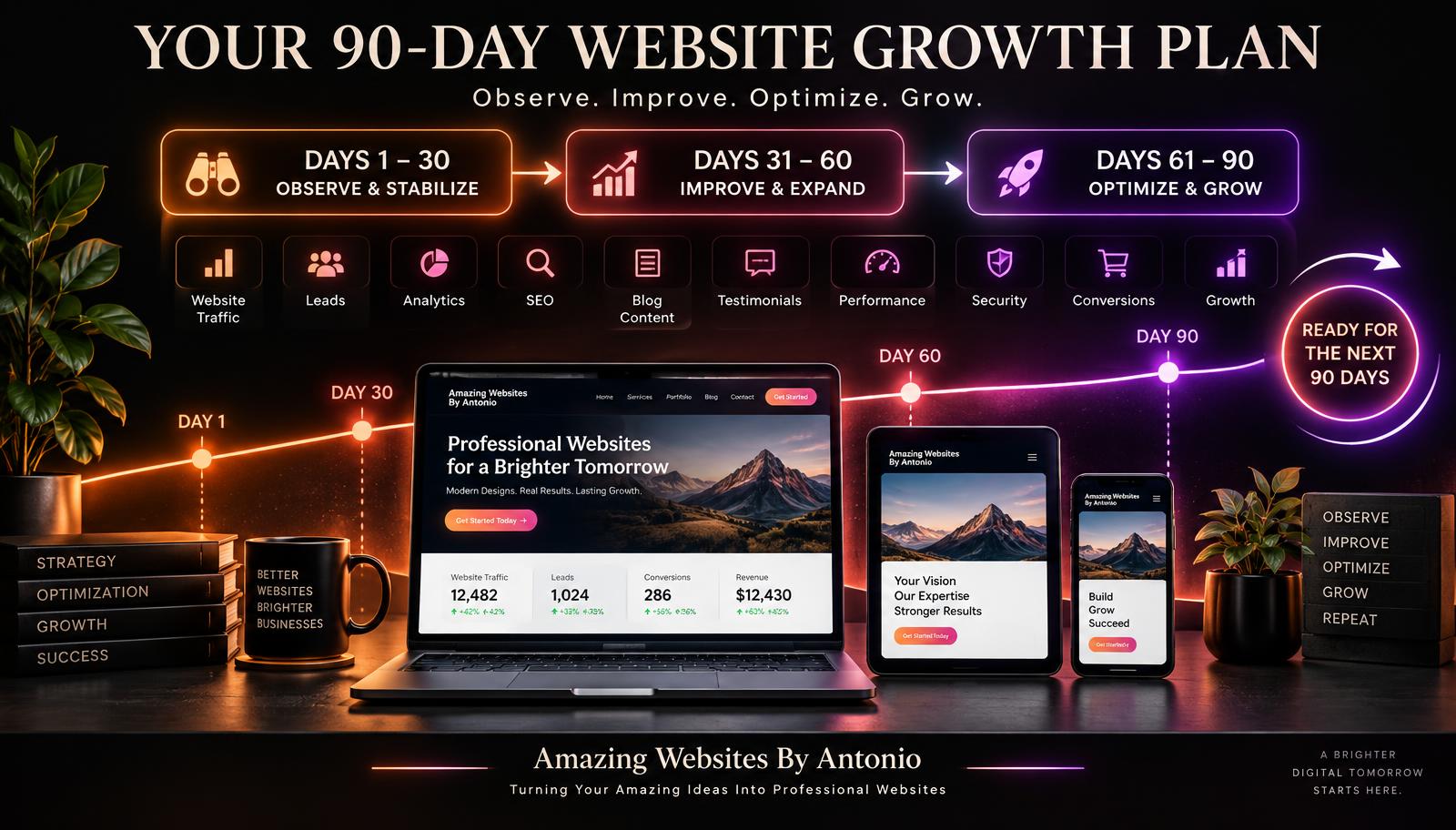
Create a Monthly Website Scorecard
Once a month, review your website.
Create a simple scorecard.
Traffic
Did website traffic increase, decrease, or stay stable?
Leads
How many inquiries came through the website?
Conversions
How many visitors completed important actions?
Content
Which blogs or resources performed best?
SEO
Is organic search visibility improving?
Customer Feedback
What are people saying?
Website Health
Are there broken links, slow pages, or technical problems?
Business Results
Did the website contribute to new customers or opportunities?
This turns analytics into a business habit.
Compare Progress With Yourself
Don't become obsessed with comparing your website to giant corporations.
Compare your website with where it was:
- Last month.
- Three months ago.
- Six months ago.
- Last year.
Ask:
Are we improving?
That is often the most meaningful benchmark.
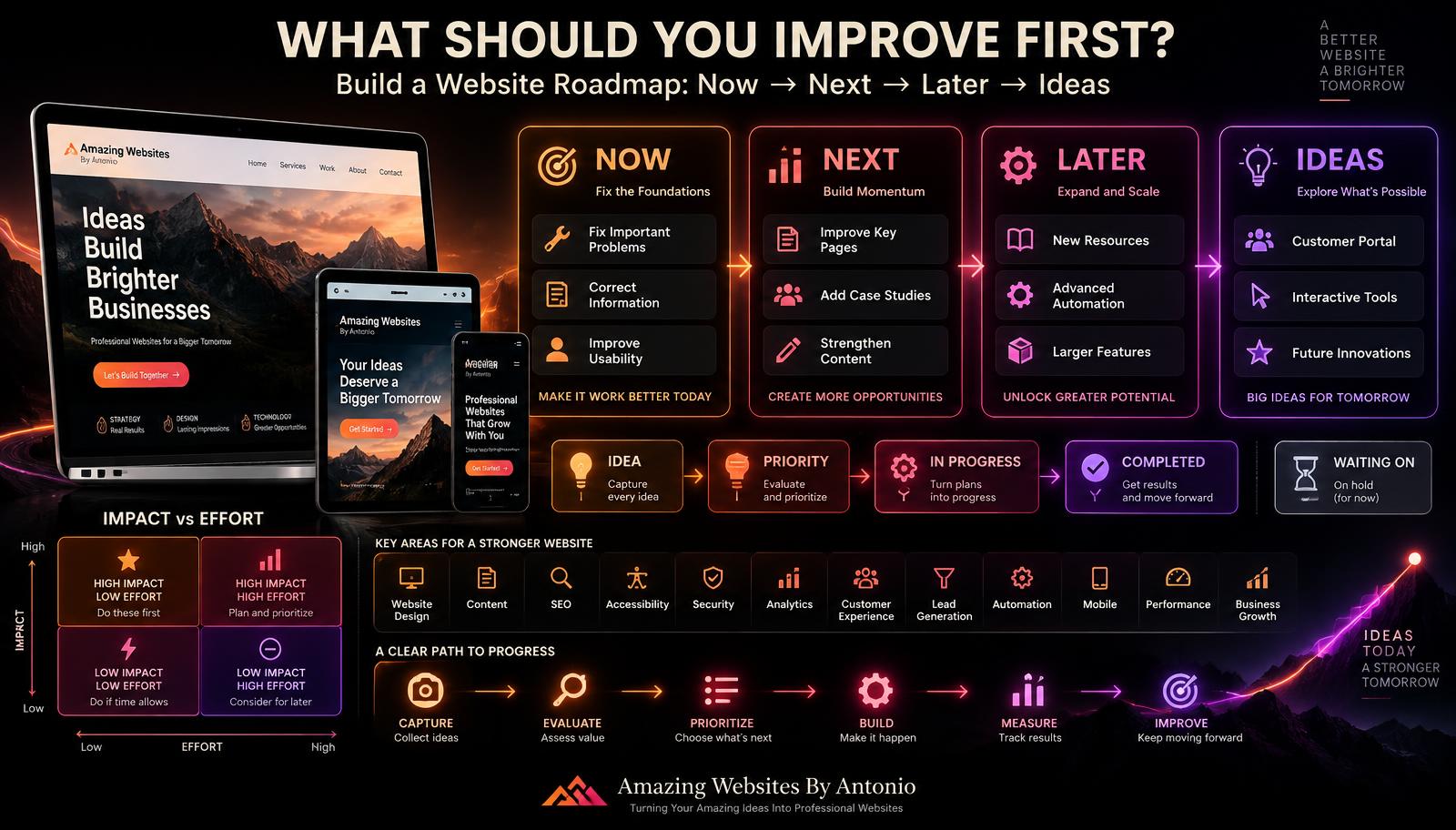
Make One Improvement at a Time
Analytics becomes powerful when it leads to action.
Suppose you discover:
Visitors read your service page but rarely contact you.
Don't redesign the entire website immediately.
Try one improvement.
Maybe:
- Strengthen the CTA
- Add an authentic testimonial
- Simplify the contact form
- Add a portfolio example
- Clarify pricing expectations
- Answer a common question
Then measure again.
Improvement comes through testing.
Look Beyond Numbers
A website may create value that isn't immediately reflected in analytics.
A customer might say:
“I looked at your website before someone referred me.”
Another might say:
“Your portfolio made me comfortable reaching out.”
Another:
“I read your blogs for months before contacting you.”
These experiences matter.
Your website helps build familiarity and trust over time.
Not everything fits neatly into a dashboard.
Your Website Should Support Your Business Goals
A beautiful website is valuable.
But the real question is:
What is it helping your business accomplish?
Maybe it's helping you:
- Attract leads
- Establish credibility
- Educate customers
- Build a community
- Sell products
- Showcase your creativity
- Strengthen your brand
- Save time
- Build relationships
Success looks different for every business.
Measure the outcomes that matter to yours.
Final Thoughts
Your website isn't finished when you publish it.
Publication is the beginning.
After launch, your website starts generating information.
Visitors show you:
- What interests them.
- What they ignore.
- Where they click.
- Where they leave.
- What brings them back.
- What inspires them to take action.
Pay attention.
Use the information.
Improve thoughtfully.
A successful website isn't simply a website with high traffic.
It's a website that helps accomplish the goals it was built to achieve.
⭐ Antonio's Pro Tip
Choose five numbers to review every month.
Start with:
- Website visitors
- Contact inquiries
- Most popular page
- Most popular blog
- Completed customer actions
Then ask one question:
“What is this information telling me to improve next?”
Don't collect data simply to have data.
Turn information into action.
That's when analytics becomes useful.
🚀 Measure What Matters. Improve What Works.
At Amazing Websites By Antonio, I believe a professional website should do more than look impressive.
It should have purpose.
- Professional website design.
- AI-powered branding.
- Creative digital solutions.
- Educational resources.
- Analytics.
- Automation.
Every part should work together to create a better digital experience and support meaningful business growth.
Your analytics tells a story.
Your visitors are writing that story every day.
Listen to what they're telling you.
Then keep building.
Let's build something amazing together.
Turning Your Amazing Ideas Into Professional Websites
Amazing Websites By Antonio
Creating Professional Websites, AI Solutions, and Digital Experiences That Help Businesses Thrive.