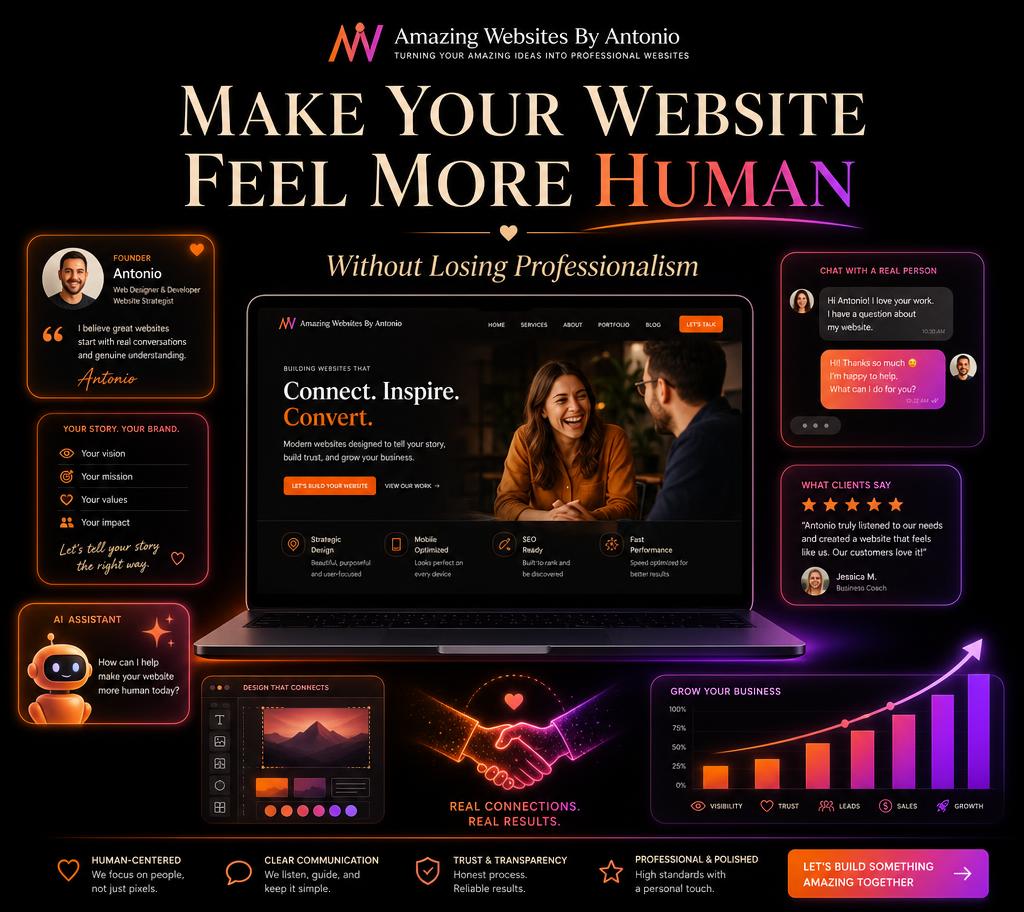
People don't only connect with businesses.
They connect with people.
A website can have beautiful graphics, professional services, impressive technology, and perfect navigation—but still feel distant.
That's why personality matters.
Your website should communicate professionalism while also helping visitors understand the people, purpose, values, and story behind the business.
The goal isn't to make your website less professional.
It's to make your professionalism feel more human.
Here are some ways to do it.
1. Let People Know Who Is Behind the Business
Visitors often want to know:
- Who created this business?
- Why did they start it?
- What do they care about?
- What makes them different?
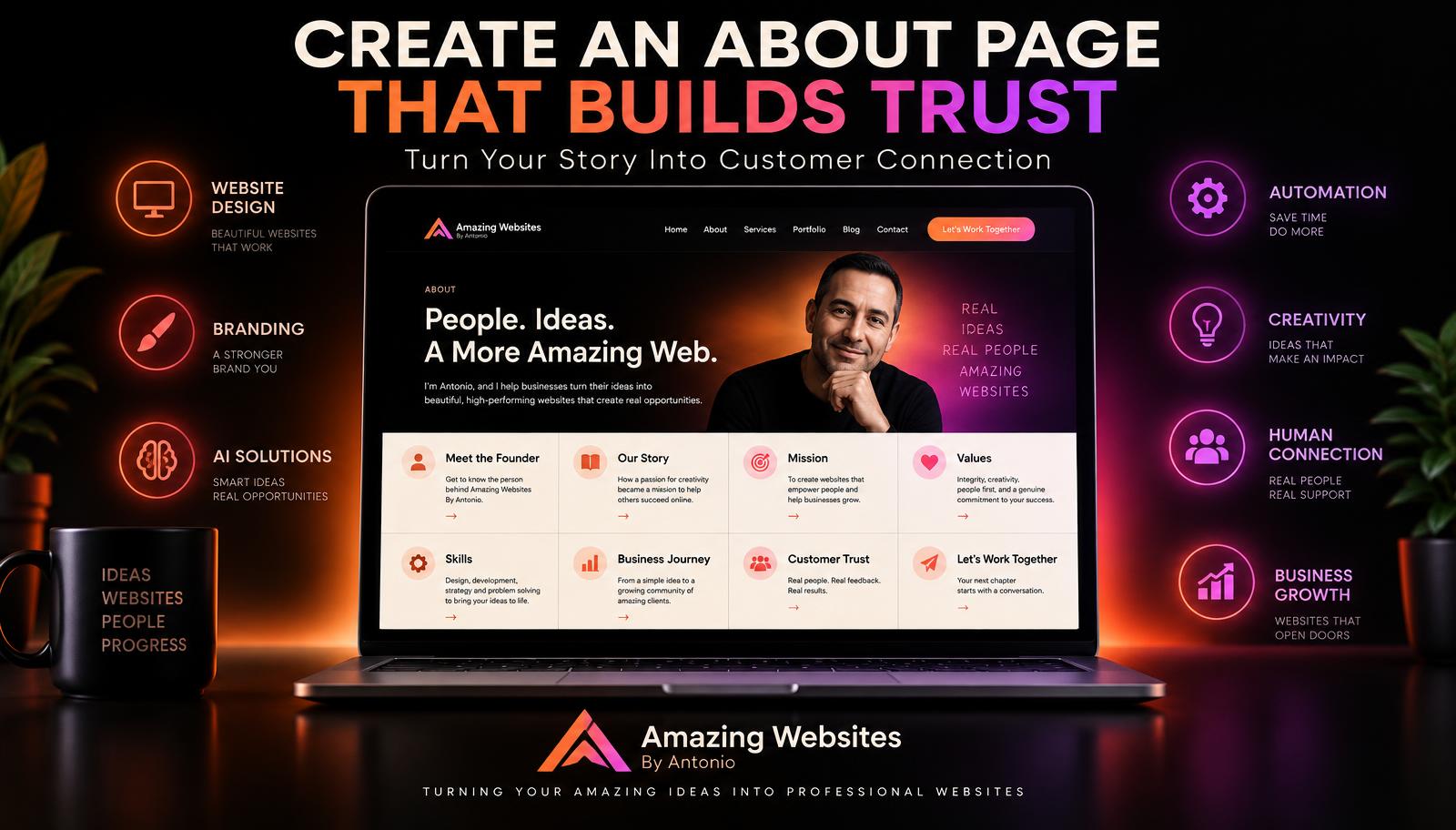
Your About page is an opportunity to answer those questions.
Instead of only listing credentials, tell visitors a little about your journey.
A business becomes more memorable when people understand the person and purpose behind it.
2. Use Your Real Voice
Professional doesn't have to mean robotic.
Compare:
“Our organization provides comprehensive digital development solutions.”
with:
“We help businesses turn their ideas into professional digital experiences.”
Both can be professional.
But the second sounds much more natural.
Write in a way that sounds like your business would actually speak to a customer.
3. Share Your Why
Why does your business exist?
Maybe you enjoy helping entrepreneurs bring ideas to life.
Maybe you want to make technology easier to understand.
Maybe you believe small businesses deserve professional digital tools.
Your “why” can create an emotional connection that a service list alone cannot.
People want to know what you do.
But they may also remember why you do it.
4. Use Real Photos When Appropriate
Stock photography can be useful.
But real photographs can make a business feel much more authentic.
Consider showing:
- The founder
- Your workspace
- Behind-the-scenes moments
- Speaking or community events
- Completed projects
- Your creative process
Visitors don't need to see every part of your life.
They simply need opportunities to see the real people behind the brand.
5. Create a Founder Message
A short founder message can be powerful.
It might say:
“Thank you for visiting Amazing Websites By Antonio. Every project begins with an idea, and I believe those ideas deserve the opportunity to become something professional, creative, and meaningful.”
Then continue with your mission and invitation to explore the website.
A founder message makes the visitor feel welcomed personally.
6. Tell Stories Through Your Portfolio
A portfolio doesn't have to say only:
“Here is a website I built.”
Tell the story.
What did the client need?
What was the goal?
What did you create?
What challenge did you solve?
What was the final result?
Stories help visitors understand the thinking and care behind your work.
7. Let Testimonials Bring Other Voices Into Your Website
You shouldn't have to be the only person saying your business provides value.
Customer testimonials allow real experiences to speak for you.
A strong testimonial can communicate:
- Trust.
- Results.
- Professionalism.
- Customer service.
- Creativity.
- Confidence.
When appropriate, include the customer's name, business, service received, and rating with their permission.
8. Show Your Values Through Action
It's easy to put words like:
- Quality
- Innovation
- Creativity
- Integrity
on a website.
The stronger approach is to demonstrate those values.
If you value communication, explain your communication process.
If you value innovation, show innovative projects.
If you value customer service, make support easy to access.
If you value creativity, let visitors see your creative work.
Values become more meaningful when visitors can see them in action.
9. Make Your Calls to Action Feel Human
Not every button has to say:
- Submit
- Buy
- Click Here
Try language that feels more conversational.
Examples:
- Let's Talk About Your Idea
- Start Your Project
- Show Me What's Possible
- Help Me Choose
- Let's Build Something Amazing
The button still has a clear purpose.
It simply feels more inviting.
10. Use Video to Introduce Your Business
A short welcome video can create a strong connection.
Imagine a visitor landing on your About page and seeing:
Meet Antonio
Then a short video introduces the business, explains the mission, and welcomes visitors.
It doesn't need to be a 20-minute presentation.
Even a short, polished video can help people feel like they've met the person behind the company.
11. Keep Personal Content Relevant
Being personal doesn't mean sharing everything.
Ask:
- Does this information help the customer understand me?
- Does it help explain the business?
- Does it strengthen trust?
- Does it support the brand story?
If the answer is no, it may not belong on the business website.
Personalization should have purpose.
12. Keep Your Design Professional
Your personality can shine through while the website maintains strong design standards.
Continue using:
- Consistent brand colors
- Professional typography
- Clean layouts
- Strong spacing
- Clear navigation
- High-quality images
- Mobile-friendly design
- Consistent buttons
Personality and professionalism aren't opposites.
They can strengthen each other.
13. Make the Customer Part of the Story
Your website shouldn't only talk about you.
The customer should be able to imagine themselves working with you.
Instead of:
“We build websites.”
Try:
“Turn your business idea into a professional website designed around your goals.”
The customer becomes part of the message.
14. Personalize the Experience With AI
AI can help websites become more personal without requiring every visitor to see exactly the same experience.
Imagine a visitor saying:
“I'm starting my first business.”
Your AI assistant could guide them toward beginner-friendly services.
Another visitor says:
“I already have a website, but I want to automate my business.”
They could be guided toward AI and automation solutions.
The website begins responding to individual needs.
That's personalization with a purpose.
15. Don't Let AI Remove the Human Connection
AI can improve efficiency.
But businesses should be careful not to automate every human interaction.
Customers may still want to:
- Ask a real person a question.
- Discuss their idea.
- Explain a unique situation.
- Receive personalized guidance.
Use AI to support the customer relationship—not replace it.
16. Create a Consistent Personality Across the Website
Your homepage shouldn't sound friendly while your contact page suddenly sounds cold.
Your personality should carry through:
- Homepage
- About
- Services
- Portfolio
- Blog
- FAQ
- Contact
- Thank-you pages
- Emails
- Social media
The tone doesn't have to be identical everywhere, but it should feel like the same brand.
17. Let Your Blog Show Your Personality
A business blog is another opportunity to show how you think.
You can share:
- Lessons.
- Ideas.
- Strategies.
- Experiences.
- Tips.
- Industry observations.
- Helpful guidance.
Over time, readers begin understanding not just what your business sells—but how your business approaches problems.
That creates familiarity.
18. Celebrate Your Journey
Businesses evolve.
It's okay to celebrate milestones.
- Your first customer.
- A new service.
- A new website.
- A certification.
- A major project.
- A business anniversary.
- Your 50th blog.
- Your 70th blog.
Milestones remind visitors that there is a real journey happening behind the brand.
19. Don't Try to Sound Like Every Other Business
Your website shouldn't feel as if the business name could be replaced with any competitor's name and nobody would notice.
Ask yourself:
- What makes our story different?
- What makes our approach different?
- What do customers remember about us?
- What do we believe?
- What do we want people to feel when they visit?
Those answers can help shape a more distinctive website.
20. Professional Doesn't Have to Mean Impersonal
Some businesses become so focused on looking professional that they remove everything that makes them memorable.
Professionalism means:
- Being reliable.
- Being clear.
- Communicating well.
- Delivering quality.
- Respecting customers.
- Keeping promises.
- Creating a strong experience.
It doesn't mean removing personality.
The Best Business Websites Feel Human
Technology changes.
AI evolves.
Website designs change.
Platforms change.
But business is still built around people.
Behind every click is a person.
Behind every contact form is a person.
Behind every business is a story.
And behind every customer relationship is trust.
Your website should reflect that.
Pro Tip
Read your homepage out loud.
Then ask yourself:
- “Does this sound like my business?”
- “Does this sound like something I would actually say to a customer?”
- “Can visitors understand who is behind this company?”
- “Does the website feel welcoming?”
- “Does it still feel professional?”
If your website is polished but doesn't sound or feel like you, there may be an opportunity to bring more personality into the experience.
Be professional.
Be clear.
Be helpful.
But don't be afraid to be human.
That's often what makes a business memorable.
Amazing Websites By Antonio
Turning Your Amazing Ideas Into Professional Websites