Every business has a story.
Maybe yours started with an idea. Maybe you discovered a problem you wanted to solve. Maybe a personal passion became a business. Maybe you learned a new skill and realized you could use it to help others. Maybe someone encouraged you to take a chance on yourself.
Whatever the beginning looked like, your story can become an important part of your brand.
Customers can find hundreds of businesses offering products and services. Your story helps answer a different question: “Why should I remember this one?”
Here are some ways to tell your brand story through your website.
1. Start With the Beginning
People understand stories when they have a starting point. Think about the moment your business began. Ask yourself:
- What inspired the idea?
- What were you trying to accomplish?
- What did you want to change?
- Who did you want to help?
You don't need an extraordinary Hollywood-style origin story. You need an authentic one. A simple beginning can be powerful when it explains why the business matters to you.
2. Explain Your Why
Your website probably explains what you do. Your brand story should also explain why you do it.
For example, a website designer doesn't simply build websites. Their deeper purpose might be helping entrepreneurs turn ideas into professional businesses. An artist doesn't simply create artwork. Their purpose might be turning imagination, emotion, and stories into something people can see and experience.
The “why” gives meaning to the “what.”
3. Make the Customer Part of the Story
Your brand story shouldn't be entirely about you. Eventually, the story needs to connect to your customer. Think of it this way:
This is where I started. This is what I learned. This is what I created. And this is how I can now help you.
That final step turns a personal story into a business story.
4. Show the Journey, Not Just the Success
Businesses sometimes present themselves as if everything appeared perfectly overnight. Real businesses develop. They learn, improve, experiment, overcome challenges, and reach milestones.
Sharing parts of that journey can make your story more believable and relatable. You don't have to share every struggle. Share the parts that help explain how your business became what it is today.
5. Talk About Important Milestones
Milestones give your story structure. They might include:
- Learning an important skill
- Completing professional training
- Earning a certification
- Launching your first website
- Creating your first customer project
- Starting your business
- Publishing a product
- Adding a new service
- Reaching a major business goal
These moments show growth.
6. Use Photos to Support Your Story
Words tell the story. Images can help people experience it. Depending on your business, you might show founder photos, early work, recent work, behind-the-scenes moments, creative projects, business events, speaking engagements, workspace photos, or milestone moments.
Choose photographs that add meaning rather than filling empty space.
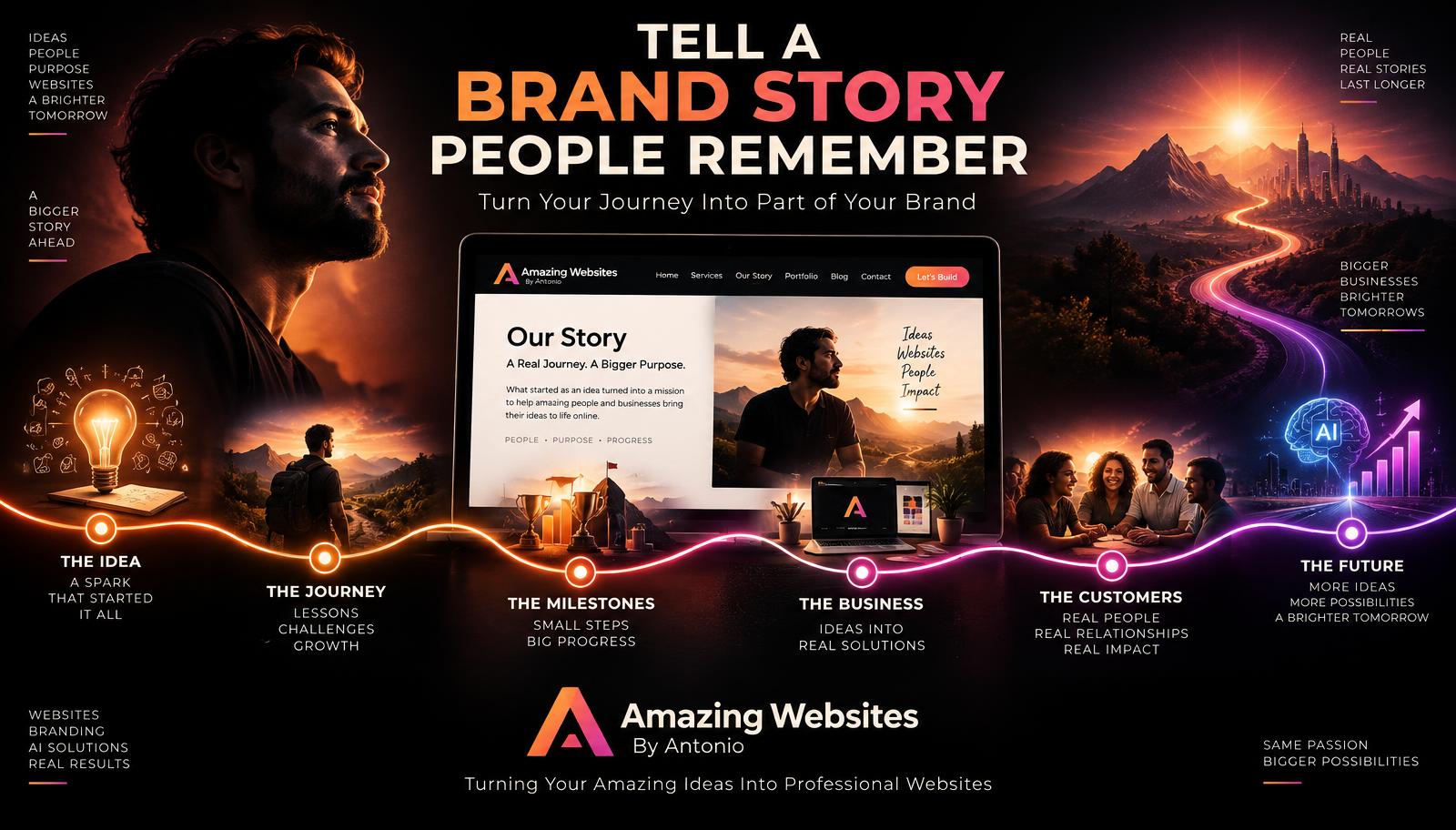
7. Create a Brand Story Timeline
A visual timeline can be a great website feature. For example:
The Idea → Learning the Skills → Creating the First Projects → Launching the Business → Growing the Services → Helping Customers → Building What's Next
A timeline turns your history into something visitors can quickly explore.
8. Show How Your Services Grew From Your Story
Your services shouldn't feel disconnected from your journey. Explain how they developed. Perhaps you started with website design. Then you discovered customers also needed branding. Then AI created opportunities for smarter business tools. Then automation helped improve business processes.
The story explains why your business offers what it does today.
9. Let Your Personality Come Through
Your brand story shouldn't sound like it was copied from a corporate brochure. If your business is creative, let it sound creative. If it's encouraging, let it sound encouraging. If it's innovative, let it sound forward-thinking. If it's professional, keep it polished. Your story should sound like your brand.
10. Don't Turn Your Story Into a Resume
Credentials can strengthen credibility. But a brand story isn't simply a list of achievements. Explain why those things mattered. What did you learn? How did they change your direction? How do they help you serve customers today? Achievements become more meaningful when they're connected to purpose.
11. Show the People Who Helped Along the Way
Businesses don't always grow alone. Teachers, mentors, customers, family, business coaches, partners, communities, programs, and supporters can all play a part. You don't need to name everyone, but acknowledging that growth can involve other people adds humanity to your story.
12. Connect Your Story to Your Values
Your journey may explain why your business values certain things. Maybe your experience taught you to value creativity, communication, accessibility, innovation, customer service, continuous learning, quality, or authenticity. Don't simply list the values. Explain how they became part of the business.
13. Use Customer Stories Too
Your brand story continues every time you help someone. A portfolio project can become a miniature story:
- The Challenge: The customer needed a professional online presence.
- The Idea: Create a website that clearly communicated the brand.
- The Solution: Design a professional, mobile-friendly website with strong calls to action.
- The Result: The customer now has a digital presence they can confidently share.
Customer stories show your brand in action.
14. Tell Your Story Throughout the Website
Your story doesn't have to live only on the About page. Pieces can appear throughout your website:
- Homepage: A short mission statement.
- About: The complete founder story.
- Portfolio: Stories behind your work.
- Services: Why you offer each solution.
- Blog: What you're learning and thinking about.
- Testimonials: How customers experience your business.
- Footer: Your core brand message.
The entire website can contribute to the story.
15. Use Video to Make the Story More Personal
A founder video can make your story even more engaging. Imagine a short section: “The Story Behind Amazing Websites By Antonio.” Then a video explaining how the business started, what inspired it, what you've learned, who you want to help, and what you're building next. People can hear your voice and see the person behind the company.
16. Use AI to Help Organize Your Story — Not Invent It
AI can help you organize ideas, improve structure, turn notes into a timeline, create interview questions, polish grammar, and create different versions for different pages. But AI shouldn't invent your history. Your brand story needs to remain yours. Technology can help tell the story. It shouldn't replace the truth behind it.
17. Keep Your Story Easy to Read
A meaningful story doesn't need to be one enormous paragraph. Use short sections, headings, photos, quotes, timeline elements, highlighted milestones, pull quotes, and video. Make the story enjoyable to explore.
18. Include Your Mission
Your past explains where you came from. Your mission explains what you're doing now. Tell visitors what you are trying to accomplish, who you want to help, and what value you want to create. A mission turns your story toward the present.
19. Include Your Vision
A great brand story can also look forward. Where is the business going? What do you hope to create? How do you want to grow? How could your services evolve? What impact do you want your business to have? Your story isn't finished. Your website can show that you're still building it.
20. Give Customers a Way to Join the Next Chapter
After telling your story, invite the visitor forward. For example: “Ready to turn your idea into something amazing? Let's talk about what you're looking to create.” Now your story connects directly to the customer's story.
Your Story Is Something Competitors Can't Copy
A competitor can offer a similar service. They can use similar technology. They can create similar website pages. They can even use similar marketing strategies. But they cannot have your exact journey, your experiences, your lessons, your perspective, your purpose, your relationships, or your vision. Those things belong to your story. That's what can make storytelling such a powerful part of branding.
Pro Tip
Before writing your About page, answer these seven questions:
- Where did my business idea begin?
- Why did I decide to pursue it?
- What did I have to learn?
- What important milestones have I reached?
- What do I believe about the work I do?
- Who do I want to help?
- Where do I want the business to go next?
Your answers are the building blocks of your brand story.
Don't simply tell customers what you sell. Help them understand why the business exists. Show them the journey. Show them the purpose. Show them the person behind it. And then invite them to become part of what comes next.
Amazing Websites By Antonio
Turning Your Amazing Ideas Into Professional Websites