Someone visits your website. They understand what you offer. They like your work. But before contacting you, they want to know something else:
Who is behind this business?
That's where your About page comes in.
An About page shouldn't simply be a biography. It should help potential customers understand your story, purpose, experience, values, personality, and—most importantly—why those things matter to them.
Here are some ways to create an About page that helps people feel confident about working with your business.
1. Remember Who the Page Is Really For
This might sound surprising:
Your About page is about you—but it's ultimately for your customer.
Visitors aren't only asking:
“Who are you?”
They're also asking:
- Can you help me?
- Do I trust you?
- Do you understand what I need?
- Why should I choose your business?
Your story should help answer those questions.
2. Start With a Strong Headline
Instead of beginning with:
ABOUT US
You could lead with something more meaningful.
For example:
TURNING CREATIVE IDEAS INTO PROFESSIONAL DIGITAL EXPERIENCES
or:
MEET THE PERSON BEHIND THE BUSINESS
or:
EVERY AMAZING PROJECT STARTS WITH AN IDEA
The headline sets the tone before visitors read the rest of your story.
3. Introduce the Person Behind the Business
People connect with people.
Introduce yourself naturally.
Tell visitors:
- Who you are.
- What you do.
- What you're passionate about creating.
- Who you enjoy helping.
Keep the introduction professional while allowing your personality to come through.
4. Share How the Journey Started
Your business didn't appear out of nowhere.
Tell visitors where the journey began.
Maybe you developed an interest in technology. Maybe creativity led you toward website design. Maybe learning AI opened new possibilities. Maybe you discovered that your skills could help other businesses bring their ideas to life.
The beginning helps visitors understand the journey.
5. Explain Your Mission
Your mission answers:
Why does this business exist today?
A strong mission focuses on the value you want to create.
For example:
“Our mission is to help businesses transform their ideas into professional websites, branding, AI-powered tools, and digital solutions designed around their goals.”
Your mission should connect what you do with who you help.
6. Talk About Your Skills Without Creating a Giant Resume
Credentials matter. But your About page doesn't need to become a résumé.
Instead of simply listing skills, explain how they benefit customers.
For example:
- WEBSITE DESIGN — Helping businesses create professional online experiences.
- BRANDING — Helping ideas become recognizable visual identities.
- AI SOLUTIONS — Using modern technology to create smarter digital experiences.
- AUTOMATION — Helping businesses simplify repetitive processes.
The customer can immediately understand why each skill matters.
7. Include Important Credentials
If you've completed certifications, professional programs, training, or meaningful projects, your About page can highlight them.
Credentials can strengthen trust.
But remember: the credential isn't the entire story. Explain what you learned and how you apply that knowledge.
8. Show a Professional Photo
A strong founder photo can make an About page feel much more personal.
Choose an image that reflects your brand. Depending on the business, that might be:
- A professional portrait.
- A creative workspace photo.
- A speaking photo.
- A photo of you working.
- A photograph connected to your business journey.
The goal is to help visitors see the real person behind the company.
9. Show Your Personality
Professional doesn't have to mean emotionless.
If you're creative, let visitors see creativity. If you're enthusiastic about technology, communicate that excitement. If you care deeply about helping people bring ideas to life, say so.
Your personality can become part of what makes your business memorable.
10. Explain What Makes Your Approach Different
Avoid vague statements such as:
“We are the best.”
“We provide unmatched quality.”
Instead, explain your approach.
Maybe you combine:
- Creativity + Technology
- Website Design + Branding
- AI + Human Connection
- Business Strategy + Digital Tools
Those combinations can help visitors understand how you think differently.
11. Include Your Values
Choose values that actually influence how you work.
For example:
- Creativity
- Communication
- Professionalism
- Innovation
- Customer Experience
- Continuous Learning
Then explain what those values mean. “Communication” becomes more powerful when you explain how you keep customers informed.
12. Show Your Growth
Your About page can show that your business continues evolving.
Maybe you began with one skill and expanded into several services.
Show that progression:
WEBSITE DESIGN → BRANDING → AI SOLUTIONS → AUTOMATION → DIGITAL BUSINESS TOOLS → WHAT'S NEXT?
Growth communicates curiosity, adaptability, and ambition.
13. Include a Short Timeline
A visual timeline can make your journey easy to explore.
For example:
- THE BEGINNING — Learning digital and AI skills.
- THE FIRST PROJECTS — Turning ideas into real websites and creative work.
- THE BUSINESS — Launching a professional service brand.
- EXPANSION — Adding branding, AI solutions, automation, and digital tools.
- THE FUTURE — Continuing to create new ways to help businesses grow.
This makes your story visually engaging.
14. Include a Founder Message
Consider adding a personal message.
Something like:
“Thank you for taking the time to learn more about Amazing Websites By Antonio. I believe great ideas deserve the opportunity to become something professional, creative, and meaningful. My goal is to listen to what you're trying to accomplish and explore how technology and creativity can help bring that vision to life.”
A short founder message can create a personal connection.
15. Show Proof of Your Work
After reading your story, visitors may want evidence.
Give them an easy path to:
- View Portfolio
- Read Testimonials
- Explore Services
- View Projects
Your story and your work should support each other.
16. Include Customer Experiences
A testimonial can fit naturally on an About page.
Why? Because you're telling visitors who you are. A customer can help explain what it feels like to work with you.
Consider featuring one or two strong testimonials and linking to your full Testimonials page.
17. Talk About Who You Want to Help
Your About page should make your ideal customers feel included.
For example:
“We work with entrepreneurs, small businesses, organizations, and growing brands looking for professional digital solutions.”
Visitors can immediately ask: “Is this business for someone like me?” Help them answer yes—or determine whether you're the right fit.
18. Keep the Page Visually Interesting
Avoid one enormous block of text.
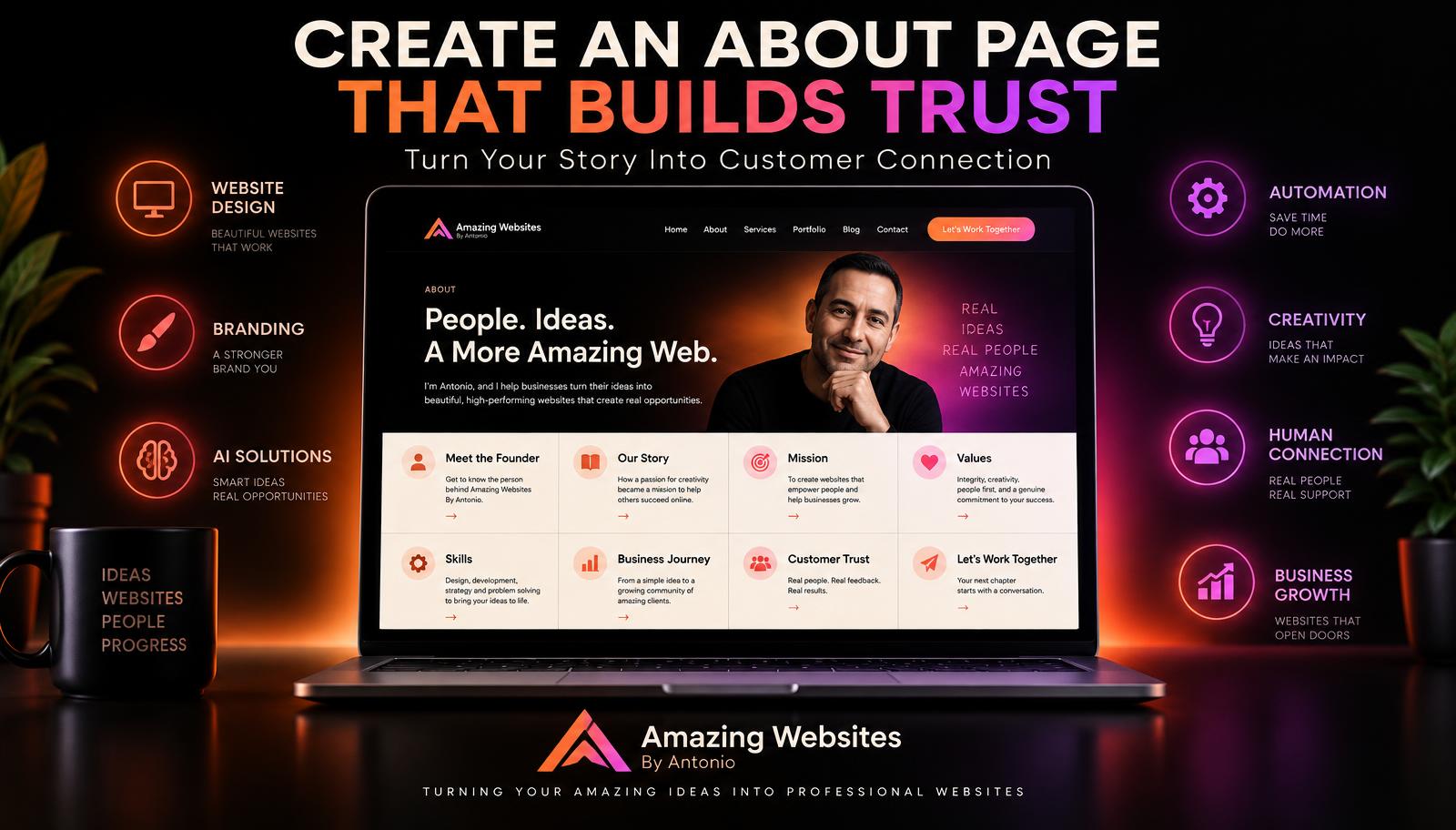
Break your About page into sections such as:
- Meet the Founder
- My Story
- The Mission
- What I Create
- My Values
- The Journey
- Customer Experiences
- What's Next
- Let's Work Together
Use photos, icons, cards, timelines, and spacing to make the page enjoyable to explore.
19. Think About Mobile Visitors
Your About page should tell the same powerful story on a phone.
Check:
- Are paragraphs easy to read?
- Are photos properly sized?
- Does the timeline work?
- Are buttons easy to tap?
- Does the page require excessive scrolling through giant images?
A great story still needs great usability.
20. Use AI to Help Organize Your Story
If you have years of ideas, achievements, projects, and experiences, organizing them can be difficult.
AI can help:
- Create interview questions.
- Organize milestones.
- Identify important themes.
- Turn notes into sections.
- Create shorter versions of your story.
- Improve readability.
But keep one rule: AI can help communicate your story. It shouldn't invent your story.
21. Connect the About Page to the Customer's Next Step
Don't end the page with nowhere to go.
After visitors learn who you are, invite them forward.
For example:
HAVE AN AMAZING IDEA?
Let's explore how we can turn it into a professional digital experience.
You can also offer:
- View Services
- Explore Portfolio
- Contact Us
The About page should be part of the customer journey—not a dead end.
22. Update Your About Page As You Grow
Your story will continue changing.
You may:
- Earn new credentials.
- Add services.
- Complete major projects.
- Reach milestones.
- Develop new skills.
- Expand your mission.
Your About page should grow with the business. Review it periodically so it represents who you are today—not who you were when the website first launched.
Your About Page Is About Trust
People may come to your website because they need a service. But they may choose your business because they trust the person behind it.
That's why an About page can be so important. It combines your story, your skills, your mission, your values, your personality, your work, and your customer's needs.
The goal isn't to impress people with everything you've ever accomplished. The goal is to help the right people understand:
- Who you are.
- What you believe.
- What you can help them create.
- And why they can feel confident taking the next step.
Pro Tip
Open your About page today and perform this simple test.
After reading it, can a new visitor answer these five questions?
- Who is behind this business?
- Why was the business created?
- What does this person or business do?
- Why should I trust them?
- What should I do next?
If one of those answers is missing, you've found an opportunity to make your About page stronger.
Don't create an About page simply because every website is supposed to have one. Create an About page that builds a relationship. Tell your story. Show your purpose. Demonstrate your experience. Make the customer part of the journey. Then invite them to create the next chapter with you.
Amazing Websites By Antonio
Turning Your Amazing Ideas Into Professional Websites