A business website can explain your services.
It can display your portfolio. It can answer questions. It can show testimonials.
But sometimes visitors want something more personal. They want to hear from the person behind the business.
That's where a Founder’s Letter can become powerful.
A Founder’s Letter gives you an opportunity to speak directly to your audience in your own voice. It can tell people why you started, what you believe, what you're building, and why your customers matter.
Done well, it doesn't feel like another marketing page. It feels like a conversation.
Here are some ways to create a Founder’s Letter that connects.
1. Write to One Person
Imagine one potential customer sitting across from you. What would you want them to know?
Instead of writing:
“Dear valued customers and stakeholders...”
you might begin:
“Thank you for taking the time to visit and learn more about our story.”
The second version immediately feels more human.
2. Start With Gratitude
Someone chose to spend time exploring your business. Acknowledge that. A simple thank-you creates a welcoming beginning.
You might thank visitors for:
- Visiting your website
- Supporting your business
- Exploring your work
- Trusting you with an idea
- Becoming part of your journey
Gratitude sets the tone for everything that follows.
3. Explain Why You Started
Your Founder’s Letter should help visitors understand the beginning.
Ask yourself:
- What inspired me?
- What opportunity did I see?
- What did I want to create?
- Who did I want to help?
- What made me believe this business was worth pursuing?
Don't worry about making the beginning sound dramatic. Make it authentic.
4. Share Your Purpose
Your business may sell products or services. But what is the deeper purpose?
Maybe your goal is to help entrepreneurs bring their ideas to life. Maybe you want technology to feel more approachable. Maybe you believe businesses deserve digital tools that represent them professionally.
Purpose helps people understand what drives the company.
5. Explain What You Believe
A Founder’s Letter is an excellent place to share a few beliefs that guide your work.
- I believe every great project starts with an idea.
- I believe technology should help people—not overwhelm them.
- I believe creativity and professionalism can work together.
- I believe AI should strengthen human creativity rather than eliminate it.
- I believe listening to the customer matters.
Your beliefs help visitors understand how you approach your work.
6. Share Part of the Journey
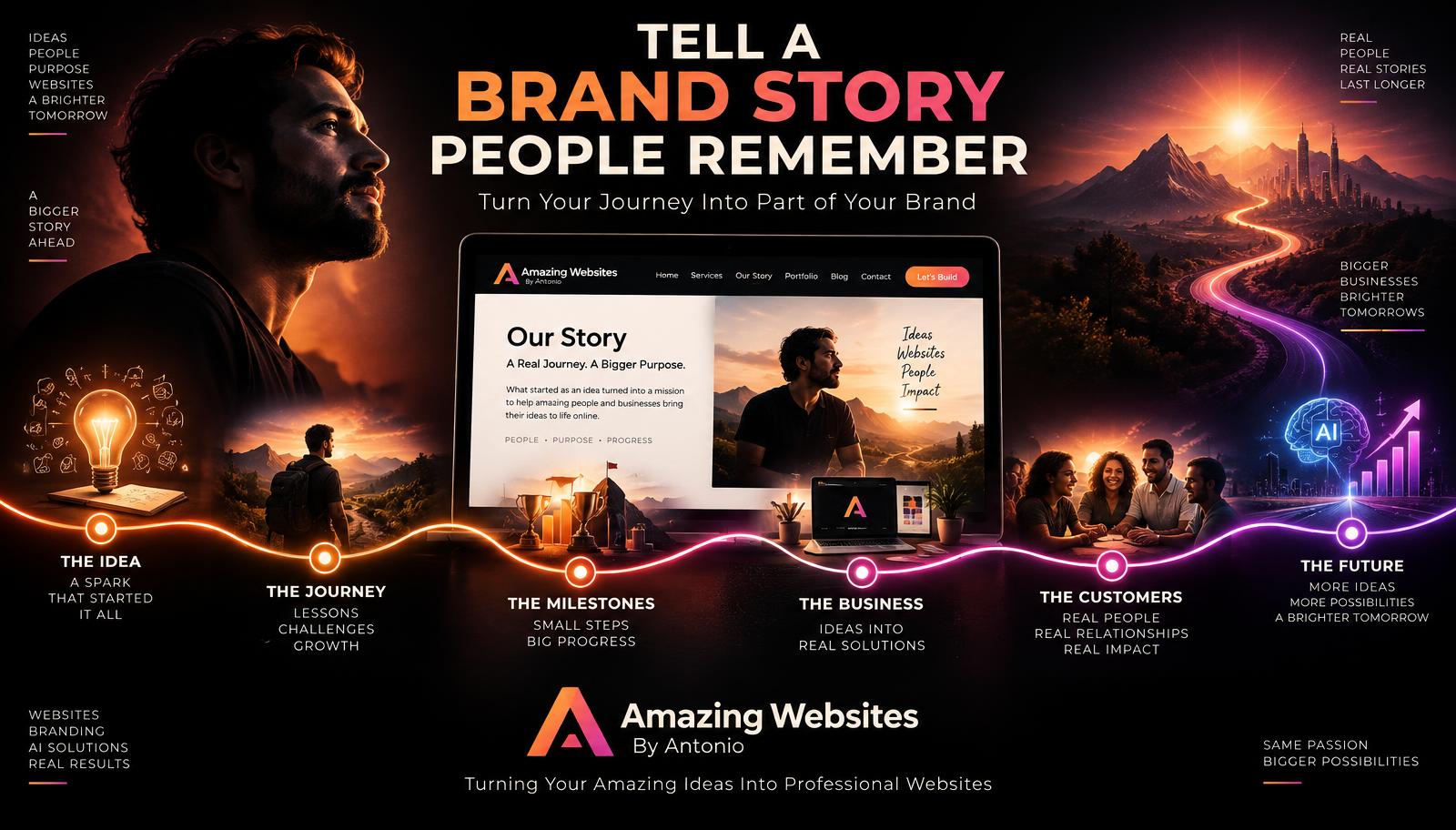
Visitors don't need every detail of your history. Choose moments that shaped the business.
Perhaps you learned new skills, completed training, created your first website, worked on your first client project, expanded into branding, started exploring AI, built automation tools, or reached an important milestone.
Each step can show growth.
7. Talk About What You Learned
Achievements are valuable. Lessons can be even more interesting.
Maybe you learned that:
- Strong communication matters.
- Customers don't always know exactly what they need.
- Good design needs a clear purpose.
- AI works best when combined with thoughtful human direction.
- A website is never really finished—it continues evolving with the business.
Lessons demonstrate growth and experience.
8. Make the Customer Part of the Letter
Eventually, the letter should shift from my story to how my story can help you.
Tell visitors what you want to help them accomplish.
“Whether you're starting with a simple idea or already have an established business, my goal is to understand what you're trying to accomplish and help turn that vision into something professional.”
Now the reader becomes part of the story.
9. Explain What Makes Your Approach Different
You don't have to attack competitors or claim to be “the best.” Explain your approach instead.
Maybe your business combines:
- Creativity + Technology
- Professional Websites + Branding
- AI + Human Connection
- Automation + Customer Experience
- Ideas + Execution
That tells people what makes working with your business distinctive.
10. Keep the Language Natural
Your Founder’s Letter should sound like you. Avoid filling it with corporate language you would never use in a real conversation.
Instead of:
“We leverage innovative digital methodologies to maximize stakeholder outcomes.”
Try:
“We use modern technology, creativity, and thoughtful strategy to help turn business ideas into professional digital experiences.”
Professional doesn't have to mean complicated.
11. Let Some Emotion Into the Story
Starting and growing a business can involve excitement, uncertainty, learning, persistence, pride, gratitude, hope, and vision.
You don't need to turn the letter into a dramatic autobiography. But a little emotion reminds visitors that there's a real person behind the business.
12. Thank the People Who Helped You Grow
No entrepreneur grows entirely alone.
You may have had family, teachers, mentors, business coaches, customers, friends, programs, communities, and supporters.
You don't necessarily need to name everyone. A simple acknowledgment can show gratitude and humility.
13. Talk About Your Customers With Respect
Avoid treating customers like numbers. Your Founder’s Letter can communicate something deeper:
Every project represents someone's idea. Someone's dream. Someone's business. Someone's organization. Someone's future.
When customers trust you with those ideas, that trust matters.
14. Talk About Where You Are Today
Your story has a beginning. But visitors also need to know what the business has become.
Explain what you currently create and how your services have grown.
Your past explains the journey. Your present demonstrates capability.
15. Share Your Vision for the Future
Where are you going? What are you excited about? What do you want to create next?
Maybe you're exploring:
- Smarter websites
- AI-powered customer experiences
- Business automation
- Digital tools
- New creative services
- More ways to help entrepreneurs
Give visitors a glimpse of what's ahead.
16. Don't Make the Letter Too Sales-Heavy
A Founder’s Letter isn't a sales page. You don't need a “Buy Now” button after every paragraph.
Focus on connection, story, purpose, trust, and vision. At the end, provide one natural next step.
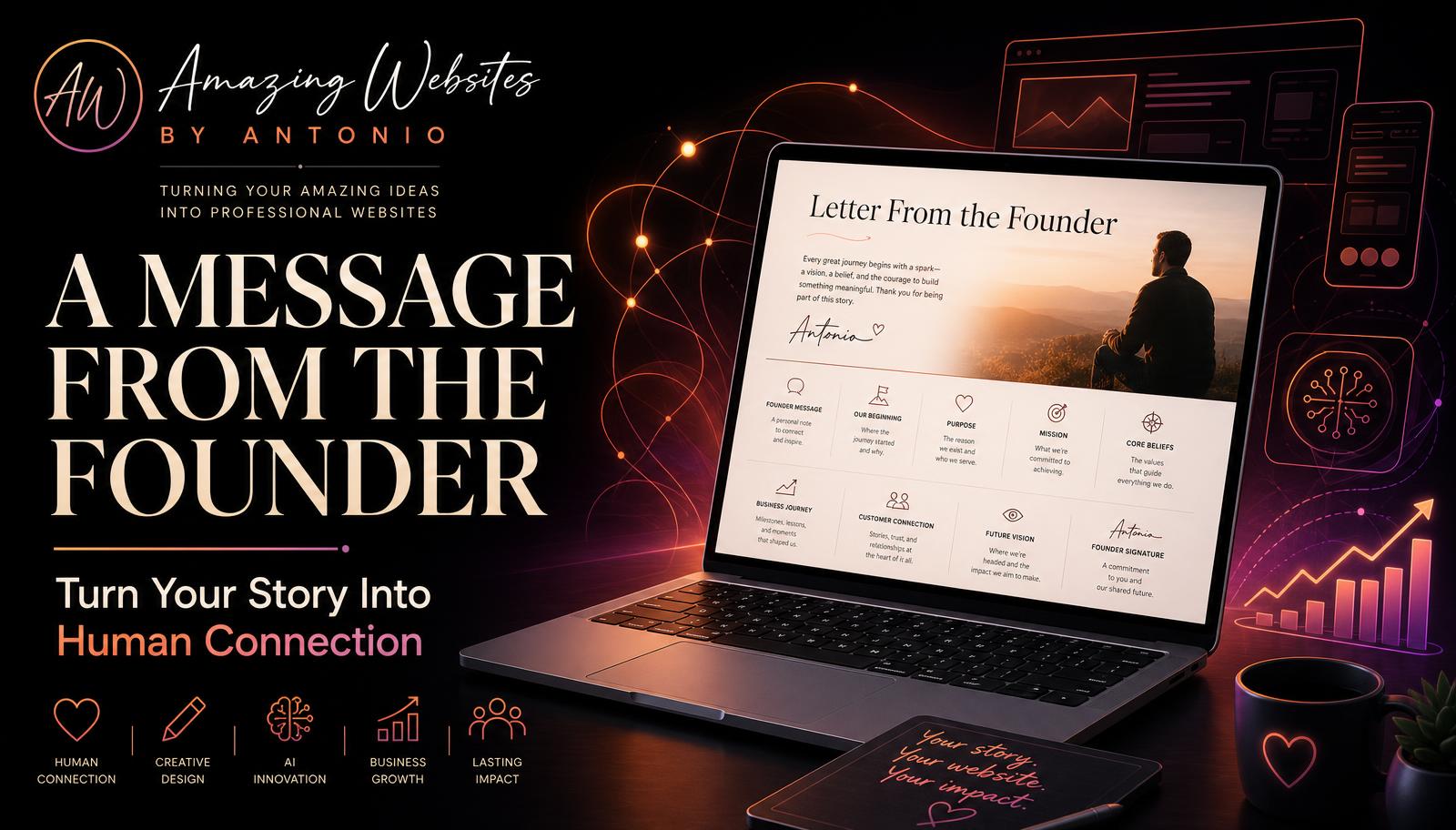
17. Include Your Signature
The ending should feel personal.
Thank you for being part of this journey.
Antonio
Founder
Amazing Websites By Antonio
A handwritten-style digital signature could add another personal visual touch.
18. Add a Professional Founder Photo
Place a professional photo near the letter. This helps visitors connect the words with the person speaking.
You might use a professional portrait, a photo at your workspace, a creative photo connected to your brand, or a speaking or presentation photograph.
Keep it authentic and professional.
19. Design the Page Like a Letter
Consider making the page visually different from a normal service page.
You could use:
- A large opening quote
- A founder photograph
- Elegant spacing
- A signature
- Highlighted quotes
- A journey timeline
- A closing call to action
The design should support the personal feeling of the message.
20. Connect the Letter to Your Brand Story
Your Founder’s Letter, About page, and overall brand story should support each other. They shouldn't contradict one another.
Think of them as different perspectives:
- About Page: Who we are.
- Brand Story: How we got here.
- Founder’s Letter: What I personally want you to know.
Together, they can create a much richer brand experience.
21. Keep the Letter Current
Your business will change. Your vision may expand. Your services may grow. You may reach new milestones.
Review your Founder’s Letter periodically. You don't need to rewrite it constantly. But make sure it still represents the business you're building today.
22. End With an Invitation
Finish by inviting the reader into the next chapter.
“Maybe you arrived here with an idea you've been thinking about for months.
Maybe you're starting a business.
Maybe you're ready to improve something you've already built.
Whatever stage you're in, I'd be honored to learn more about what you're trying to create.”
Then provide a simple next step: Tell me about your idea.
The invitation should feel like a continuation of the letter—not a sudden advertisement.
A Letter Can Create Something Technology Cannot
Websites are becoming smarter. AI is becoming more powerful. Automation is becoming more sophisticated.
But technology doesn't eliminate the importance of human connection.
Sometimes the most powerful thing on a high-tech website can be something incredibly simple: a sincere message from the person who started the business.
Your Founder’s Letter gives you that opportunity.
Pro Tip
Before writing your Founder’s Letter, answer these questions without worrying about grammar:
- Why did I start?
- What am I proud of?
- What have I learned?
- Who helped me?
- What do I believe?
- Who do I want to help?
- What do I want customers to experience?
- Where do I want this business to go?
- What would I say if a potential customer were sitting across from me?
Those answers contain the heart of your letter. Then turn them into a conversation.
Don't try to sound impressive. Try to sound genuine.
Tell people why you care. Tell them what you're building. Tell them what you've learned. Tell them how you hope to help. And thank them for becoming part of the journey.
Amazing Websites By Antonio
Turning Your Amazing Ideas Into Professional Websites