Most people don''t hesitate to hire a website professional because of price.
They hesitate because they don''t know what to expect.
They wonder how long it will take. They wonder what they''re responsible for. They wonder whether they''ll be left guessing halfway through. And when a person feels uncertain, they usually do the safest thing available to them: nothing.
A clear process removes that uncertainty.
When someone can see exactly how working with you unfolds — step by step, in plain language — the decision stops feeling risky. Confidence replaces hesitation, and the conversation shifts from "Should I do this?" to "When can we start?"
Why a Clear Process Builds Trust
A process is more than a list of steps. It is a promise about how you work.
It tells a customer that you have done this before, that nothing will be improvised, and that they will not be left wondering what happens next. It quietly answers the questions people are often too polite to ask.
Customers are not buying a website. They are buying certainty, guidance, and a good experience along the way.
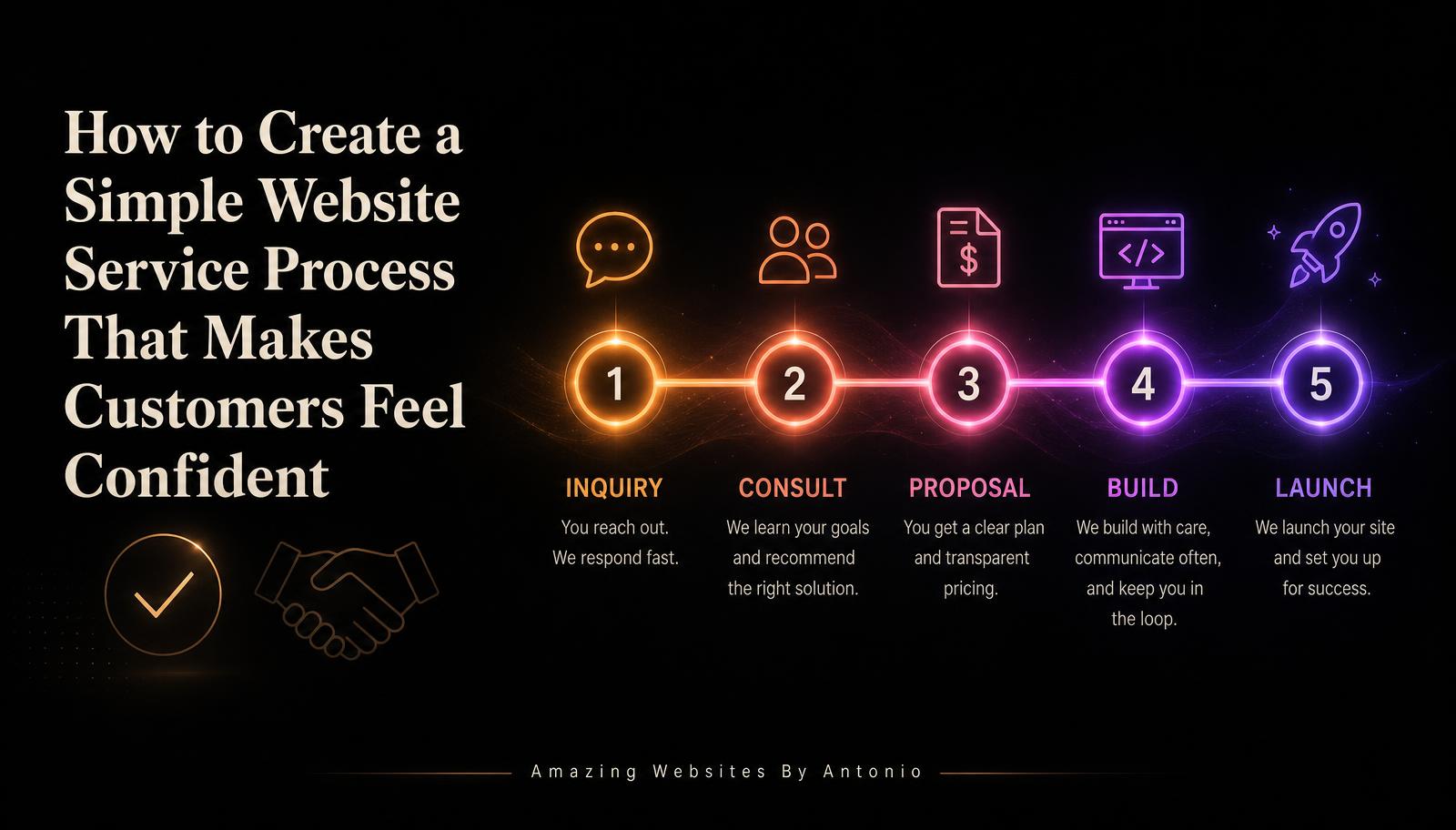
Step 1: The Inquiry
The process begins the moment someone reaches out.
Make it easy to contact you, and make the next step obvious. Tell people how quickly you respond and what will happen after they hit send. A simple line like "I''ll reply within one business day with a few questions and next steps" turns silence into reassurance.
Step 2: The Consultation
Before recommending anything, listen.
Ask what the business does, who it serves, what''s working, what isn''t, and what success would look like. This conversation is where trust is earned. It shows the customer that your recommendation will be based on their goals, not on a template.
End every consultation by summarizing what you heard. People feel confident when they know they''ve been understood.
Step 3: The Proposal
A confusing proposal creates hesitation. A clear one creates momentum.
Include what''s included, what''s not included, the timeline, the price, and what you need from them. Avoid technical jargon. If a sentence would make a non-technical person pause, rewrite it.
Step 4: The Kickoff
Once the project begins, set expectations immediately.
Explain how content will be gathered, how feedback will be shared, how many rounds of revisions are included, and how you''ll communicate. Customers feel confident when they know their role and yours.
Step 5: The Build
Silence is the fastest way to lose trust during a project.
Share progress at predictable moments. Even a short update — "Homepage layout is complete, moving to the services page this week" — keeps people calm and engaged. Consistent communication matters more than constant communication.
Step 6: Review and Revisions
Invite feedback in a structured way.
Tell customers what to look for, how to send changes, and how long revisions will take. Clear boundaries protect both sides and keep the project moving forward instead of drifting.
Step 7: Launch
Launch day should feel like a celebration, not a scramble.
Walk the customer through the finished site, confirm everything works, and explain what happens next. Provide a short guide so they know how to make simple updates on their own.
Step 8: Support and Follow-Up
The relationship doesn''t end at launch.
Follow up after a week, and again after a month. Ask what''s working, offer maintenance options, and stay available. Customers remember the businesses that stayed present after the invoice was paid.
Put Your Process Where People Can See It
A great process only builds confidence if customers know about it.
Publish it on your website in a simple visual format — five to eight steps, one sentence each. Add it to your services page, your proposals, and your consultation follow-ups. Let people see the path before they take the first step.
Keep It Simple
Complexity impresses no one. Clarity wins.
If your process cannot be explained in one short conversation, it is too complicated. Simplify it until a first-time customer could repeat it back to you.
Final Thoughts
Confidence is the real product. When a customer understands exactly what will happen, who is responsible for what, and how the project ends, hesitation disappears.
Build a simple process. Explain it clearly. Follow it consistently. That combination will win more projects than any sales pitch ever could.
Turning Your Amazing Ideas Into Professional Websites